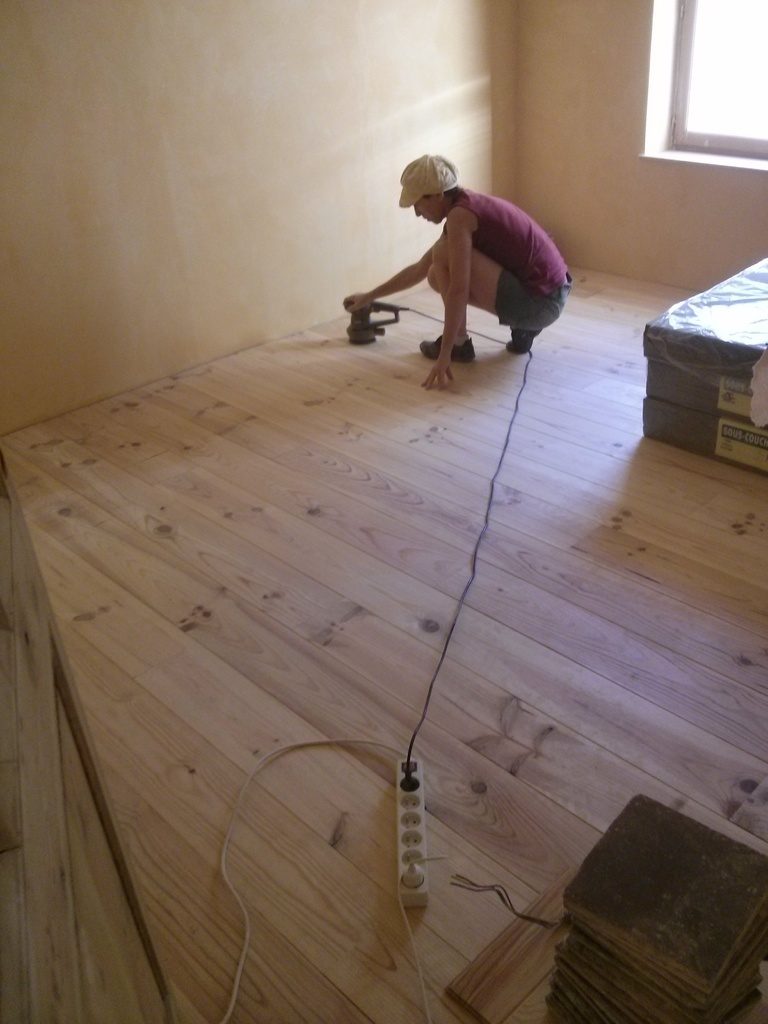
Heart pine was cut from old longleaf forests across the South, and a lot of it ended up in the bungalows and cottages of Tampa Heights, Hyde Park and Ybor. It is hard, resinous and full of colour. When we pull up carpet and find it waiting underneath, the whole crew tends to cheer.
Check before you sand
Old floors have often been sanded before, so we look at the tongue from a floor register or a threshold to see how much wood remains above it. If the boards are thin, a gentle screen and recoat may be wiser than a full sanding. We also hunt for loose nails, termite trails and patches where a wall was moved.
Patch with the right wood
New pine looks pale and bland beside heart pine. We keep a stash of salvaged boards from local tear-outs and closets so repairs blend in. Each patch is woven into the existing pattern rather than cut as a square, which keeps the eye moving across the room.
- Acclimate salvaged boards inside the house for a while so they settle into its humidity.
- Sand with the grain using progressively finer paper and vacuum between passes.
- Test finish samples on a hidden corner, since heart pine deepens noticeably under oil.
Pick a finish for Florida life
Sand tracks in from the yard, dogs skid in from the lanai and humidity swings all year. A penetrating hardwax oil gives a soft, repairable surface that you can refresh in a weekend. A waterborne polyurethane is tougher and stays lighter in colour. We walk you through samples in daylight and lamplight before deciding.
Live on it kindly
Felt pads under chairs, a mat at every door and a damp rather than wet mop will keep the glow for years. Close blinds in the hottest afternoons to slow fading near west windows. Treat it well and the floor will keep telling the story of the house long after the rest has been renewed.